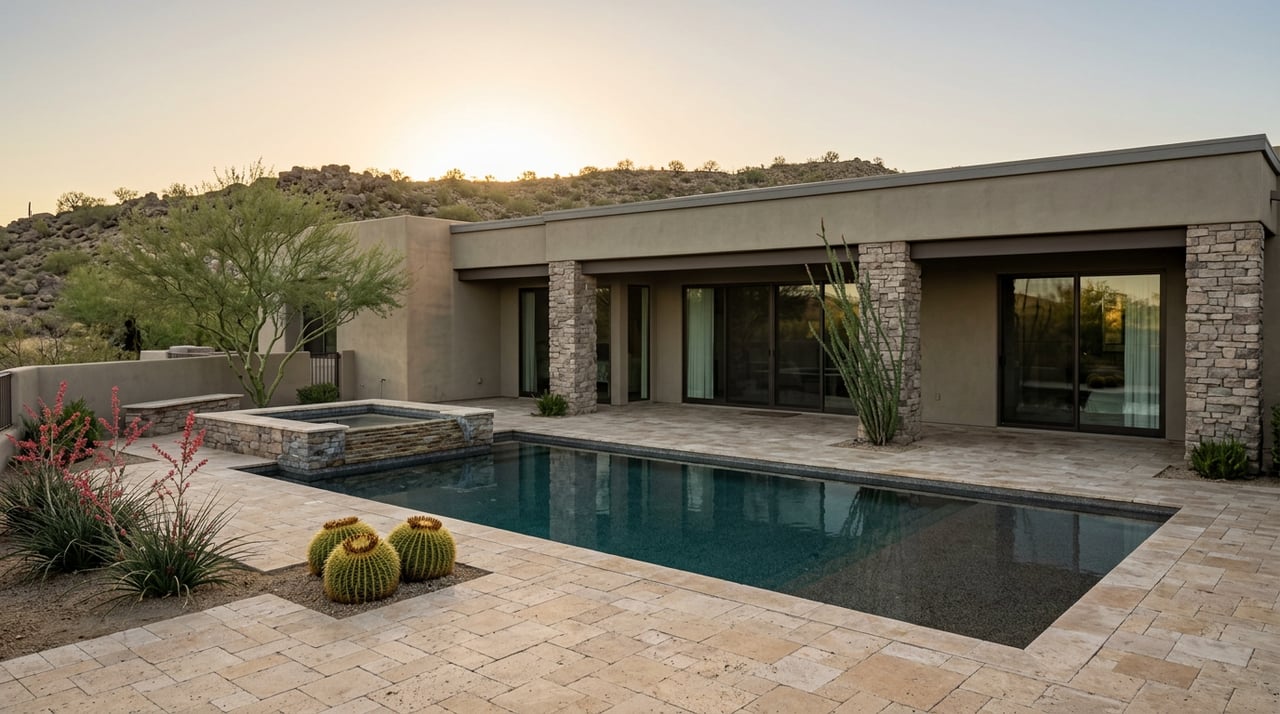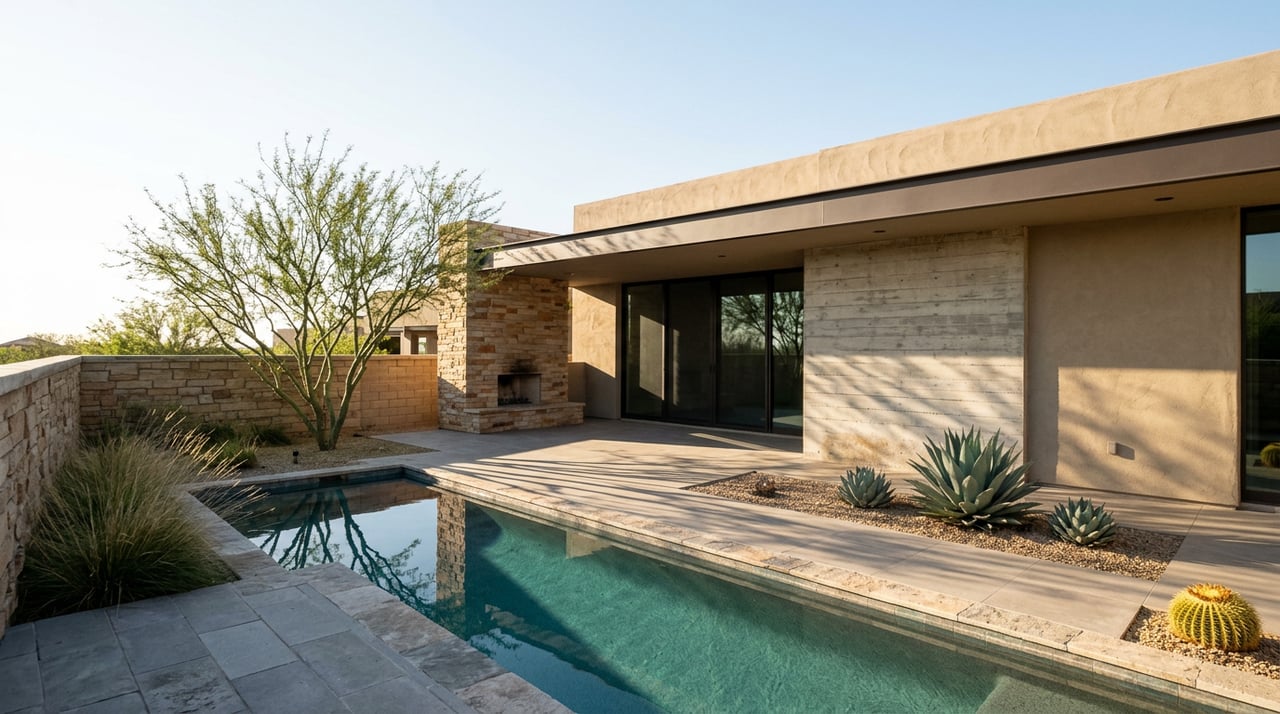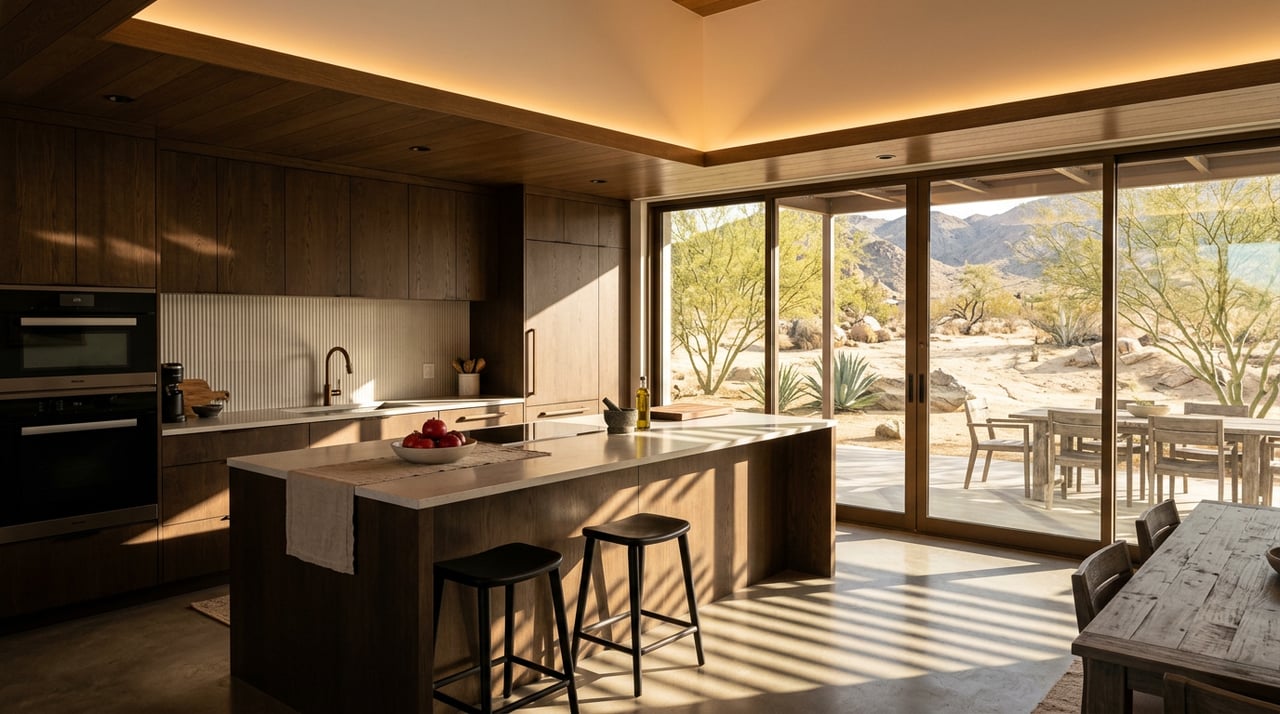
Picture two nearly identical homes for sale in Sedona this fall. Same square footage, same red rock view, same asking price down to the thousand. One sits a few blocks west of the other. On paper, a buyer comparing them side by side would call it a coin flip.
It isn't. One of those homes could owe roughly 13.3 cents in combined bed and hotel tax on every rental dollar it earns. The other owes almost 13.9 cents. The difference has nothing to do with the house. It comes down to which county the parcel sits in, because Sedona is one of the few Arizona towns split between two counties, and the short-term rental tax math changes the moment you cross that line.
That's the detail a median list price never shows you, and it's the reason anyone buying in Sedona with rental income in mind needs to look past the photos before writing an offer.
The Tax Line Nobody Reads Until Closing
Sedona straddles Yavapai County and Coconino County, and each county carries its own combined rate for short-term rental income once you stack the state, county, bed, and hotel taxes together. A property in Yavapai County lands at a combined 13.325 percent. Cross into Coconino County and that same rental income is taxed at 13.90 percent. It's a real spread on real revenue, and it applies before you even get to the state's Transaction Privilege Tax license that every operator in Arizona has to hold.
Most buyers assume a Sedona address is a Sedona address. It isn't, for tax purposes. If rental income is part of your offer math, the first call worth making isn't to a lender, it's to the county assessor's parcel lookup, so you know which rate you're actually working with before you build a pro forma around the wrong one.
| Yavapai County parcel | Coconino County parcel | |
|---|---|---|
| State and county tax | 6.325% | 6.9% |
| City bed tax | 3.5% | 3.5% |
| City hotel tax | 3.5% | 3.5% |
| Combined rate on rental income | 13.325% | 13.90% |
The Guest House You Might Not Be Able to Rent
Sedona listings that market a main house plus a casita as two income streams have been common for years. Since September 2024, that math only works under one condition. The city's ordinance restricting accessory dwelling units says any ADU issued a certificate of occupancy on or after that date cannot be used as a short-term rental unless the property owner lives in the main structure on the same lot. Older guest quarters with documented prior rental use before the ordinance can be grandfathered in, but a newer casita doesn't get that pass.
If you're evaluating a property where the pitch is "rent the house and the casita separately," the question to ask before you get attached to that number is simple: does the seller actually live on site, and if not, was that guest house renting short term before the rule changed. If the answer is no to both, that second income line in the listing sheet is aspirational, not legal.
The ordinance was written to slow new short-term rental supply, not to shut down what already existed. That distinction is exactly where buyers get tripped up, because a listing agent showing you gross rental potential isn't always checking the occupancy date on the guest house.
What Doesn't Follow You to Closing
Sedona's own permit data describes the city's short-term rental permit as non-transferable, valid for one year at a time, and tied to an owner's account in the city's MUNIRevs system. That word, non-transferable, matters more than it sounds like it should. If a seller's home has an active STR permit and a track record of bookings, that permit doesn't automatically pass to you with the deed. Buyers who plan to start renting the week they close should confirm directly with the city's short-term rental office whether a fresh application needs to go in before or immediately after closing, rather than assuming the seller's paperwork covers the gap.
The city says most renewals process in two to three business days, with up to seven business days built into the process, and since January 1, 2026, late renewals carry an automatic fee, fifty dollars if you're two to ninety days late and a hundred dollars past that. None of that is a dealbreaker. It is, however, a timeline that needs to sit inside your closing schedule instead of showing up as a surprise afterward.
The Bill Still Sitting in the Senate
The rules governing Sedona rentals have been amended repeatedly over the past two years, and the code is current through an ordinance the city council passed in December 2025. That pace of change is worth sitting with for a second, because the next shift could be bigger than a fee adjustment. Arizona House Bill 2429 passed the state House 36 to 19 in March 2026 and had not yet advanced through the Senate as of mid-2026. If it becomes law, it would let cities like Sedona set occupancy formulas, cap the total number of permits issued, and require minimum distances between short-term rental properties, none of which state law currently allows.
Right now, Arizona's 2016 preemption law still means Sedona can't cap the number of permits or ban rentals outright. That's the backdrop a lot of Sedona's rental economics are built on. A buyer closing this fall is closing under the current rules. A buyer closing a year from now might not be. If HB 2429 clears the Senate, existing permit holders would likely be positioned better than newcomers trying to enter a capped system, which is one more reason the timing of a purchase, not just the price, belongs in the conversation.
One in Six Households
As of February 2026, Sedona had roughly 1,805 active short-term rental listings against a permanent population of about 10,300 residents. That's not a market with a few dozen hosts dabbling on the side. It's closer to one in six households operating some form of rental, and it's up sharply from 1,113 listings back in 2021.
That density cuts two ways for a buyer. It confirms the demand is real, spring occupancy runs as high as 72 percent and fall stays above 60 percent, with nightly rates that climb into the hundreds during peak weeks. It also means the city's enforcement apparatus, the permit hotline, the neighbor notification rules, the code inspections, isn't theoretical. A town with that many operators per resident has built out actual infrastructure to manage complaints and revoke permits when hosts don't comply. Buying into that density means buying into that scrutiny, not around it.
What to Check Before You Write the Offer
- Confirm which county the parcel sits in using the county assessor's parcel lookup, not the mailing address, since Sedona addresses don't reliably signal the tax line
- Ask whether any guest house, casita, or ADU on the property was in short-term rental use before September 2024, and get that documented if the seller claims it's grandfathered
- Verify the STR permit is not assumed to transfer with the sale, and build a two to three week buffer into your closing timeline for a fresh application
- Ask your agent or the city's short-term rental office whether the property has any history of special event violations or code complaints tied to the address
- Track HB 2429's status in the Senate if your investment horizon runs past this year, since a change in permit caps would change what your property is worth to hold versus sell
FAQ
Does the county line affect my regular property tax bill too, or just the rental tax? It affects both, though differently. The 13.325 percent versus 13.90 percent split above applies specifically to short-term rental income. Your standard property tax bill is calculated separately using each county's own assessed rate, so a parcel's county still matters for that number. Check with the relevant county assessor for the current rate on the specific parcel.
If a listing already has an active STR permit, can I just keep renting the day I close? Not automatically. Sedona's permit system describes permits as non-transferable and tied to the current account holder. Confirm with the city's short-term rental office whether you need a new application in place before you can legally advertise, and plan your first rental date around that answer rather than the closing date.
What happens to my plans if HB 2429 passes the Senate? If it becomes law, Sedona would gain new authority to set occupancy formulas, cap total permits, and require minimum distances between rental properties, powers the city doesn't currently have under state preemption. Anyone buying with a multi-year rental horizon should watch this bill and build some flexibility into their plans rather than assuming today's rules hold indefinitely.
If you're weighing a Sedona property with rental income in the plan, the parcel's county line and its permit history deserve the same attention as the square footage. Art Thompson works Greater Phoenix and the surrounding desert communities with a straightforward, cost-aware approach to due diligence like this. Reach out before you write the offer, not after you've already committed to numbers that don't hold up under the actual rules.