Pull up three different sites and price out a home in Paradise Valley this week and you will get three different answers to the same question. One shows a typical value hovering around $3 million. Another reports a median sale price closer to $4.6 million. A third puts the number near $6 million. None of these are wrong. They are measuring the same town in the same year and landing in three different places, and that gap is not a data glitch. It is the most honest thing anyone will tell you about how this market actually works.
Most coverage of Paradise Valley treats the median like a thermostat reading, pick a source, quote the number, move on to square footage and pool size. That approach breaks down here faster than almost anywhere else in the Valley, because Paradise Valley does not generate enough monthly sales for a median to behave the way medians are supposed to behave. Understanding why that is true tells you more about what you are actually buying into than the number itself ever could.
Three Sources, Same Town, Three Different Prices
Here is what the data actually showed across 2026:
| Metric | Figure | Window |
|---|---|---|
| Zillow typical home value | roughly $3.0 million, down slightly year over year | June 2026 |
| Redfin median sale price | $6.2 million | February 2026 |
| Redfin median sale price (trailing 3 months) | $4.6 million, up 3.4% year over year | through April 2026 |
| Realtor.com median sale price | approximately $5.5 million | January 2026 |
| ILHM luxury-segment median | approximately $5.2 million | December 2025 |
Look at the two Redfin rows. Same source, same methodology, and the number drops by roughly $1.6 million between a single February read and a three-month window that closed two months later. That is not a market correction. It is what happens when a dataset is built from a genuinely small number of trades. Redfin logged 103 home sales in Paradise Valley in April 2026, down from 108 the year before, in a town of roughly 5,800 households total. When your monthly sample is measured in dozens rather than hundreds, one $20 million estate closing or one dated teardown selling at land value can swing the median by six or seven figures without any change in the underlying market.
Zillow's estimate, which tracks assessed value rather than closed sales, moved in the opposite direction over the same stretch, drifting down slightly across 2026 even as the sale-price medians from Redfin and Realtor.com climbed. Two legitimate measurement approaches, applied to the same 12 months, producing opposite trend lines. If you are trying to decide whether Paradise Valley is appreciating or cooling based on any single headline number, you are asking a question the data cannot answer on its own.
What Actually Sets the Floor
The number that explains all of this is not a price. It is a lot size.
Paradise Valley incorporated in 1961 with a one-acre minimum lot requirement written into its zoning code, and that rule has never been relaxed. It means the town has no tract-builder subdivisions, no starter-home category, and no mechanism for adding the kind of mid-market supply that would let a normal median settle into a predictable range. Every acre that could have become a neighborhood of smaller, more affordable homes was legally prevented from becoming that neighborhood decades ago.
This is why the volatility above is not a symptom of a soft or overheated market. It is a symptom of a town that cannot add supply at any price point except the one it already has. Local market coverage at the start of 2026 pegged the realistic entry point for the lower end of Paradise Valley inventory, homes that may still need updating, at $2 million to $5 million. The same reporting noted that price per square foot near Camelback Mountain view lots had climbed from roughly $685 before the pandemic to more than $2,000 as of early 2026. That is not a story about buyer taste shifting toward mountain views. It is a story about a fixed amount of one-acre land absorbing a growing amount of demand with zero ability to subdivide its way to more inventory.
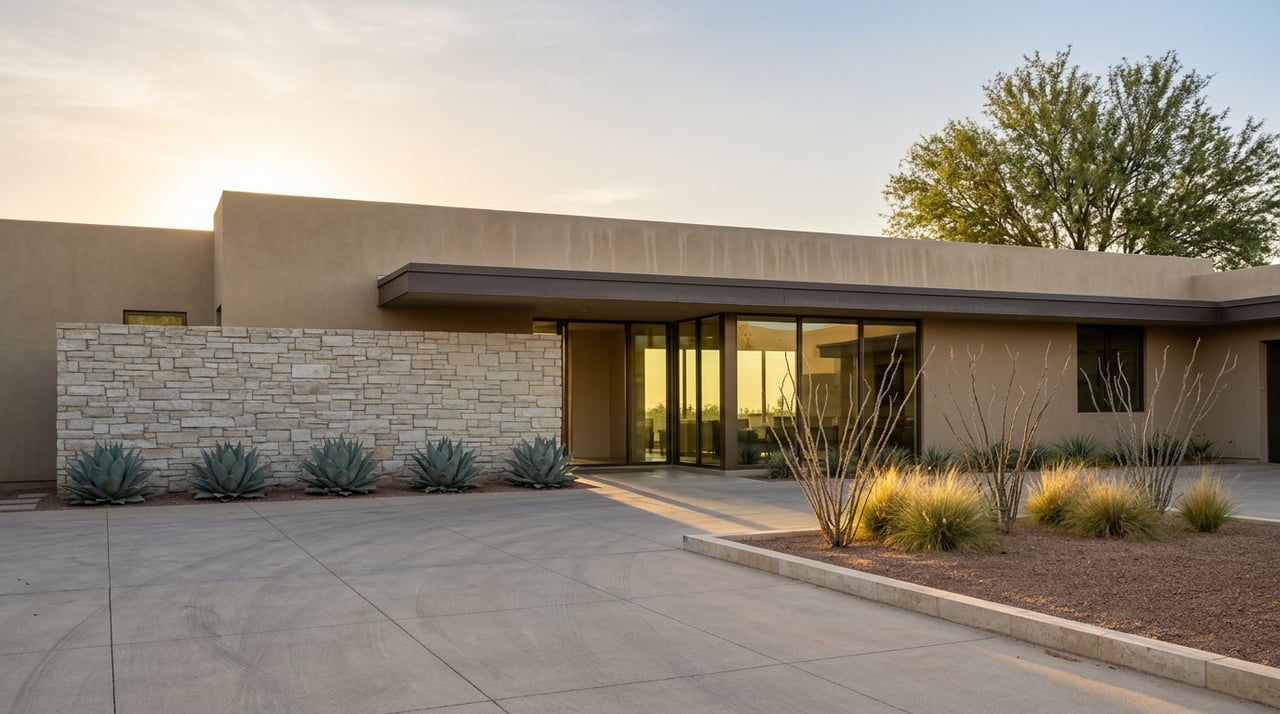
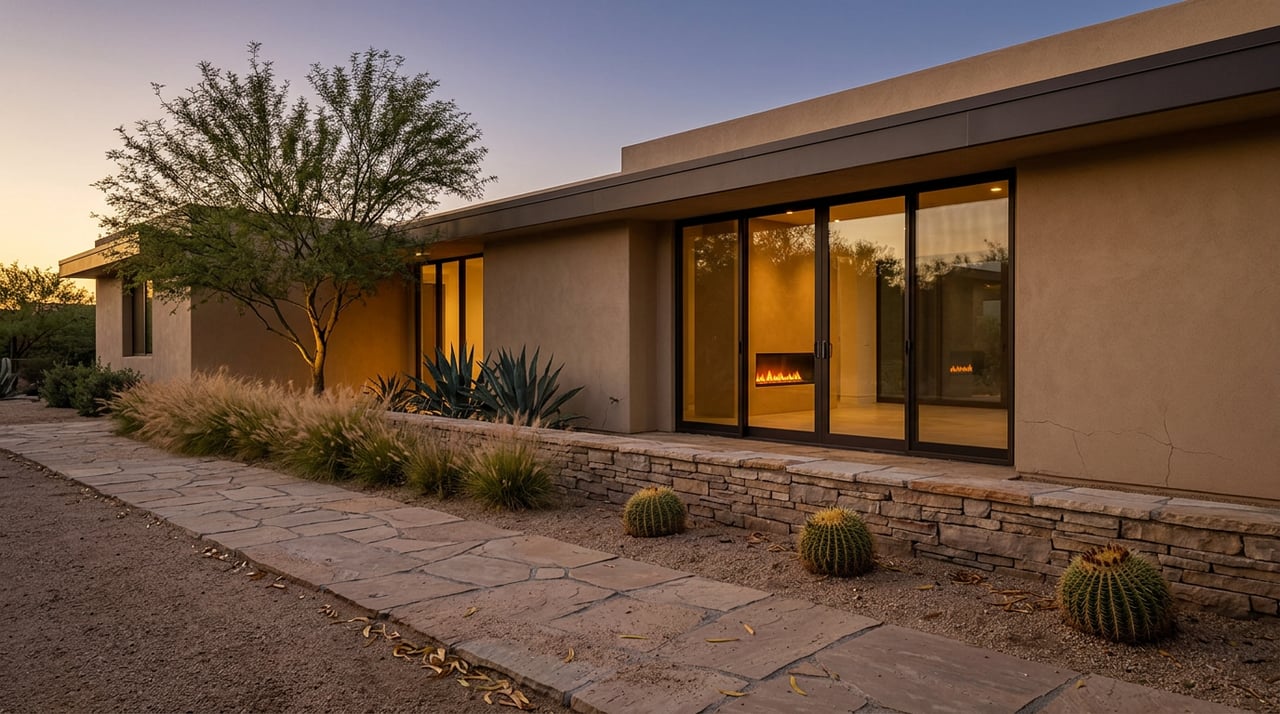
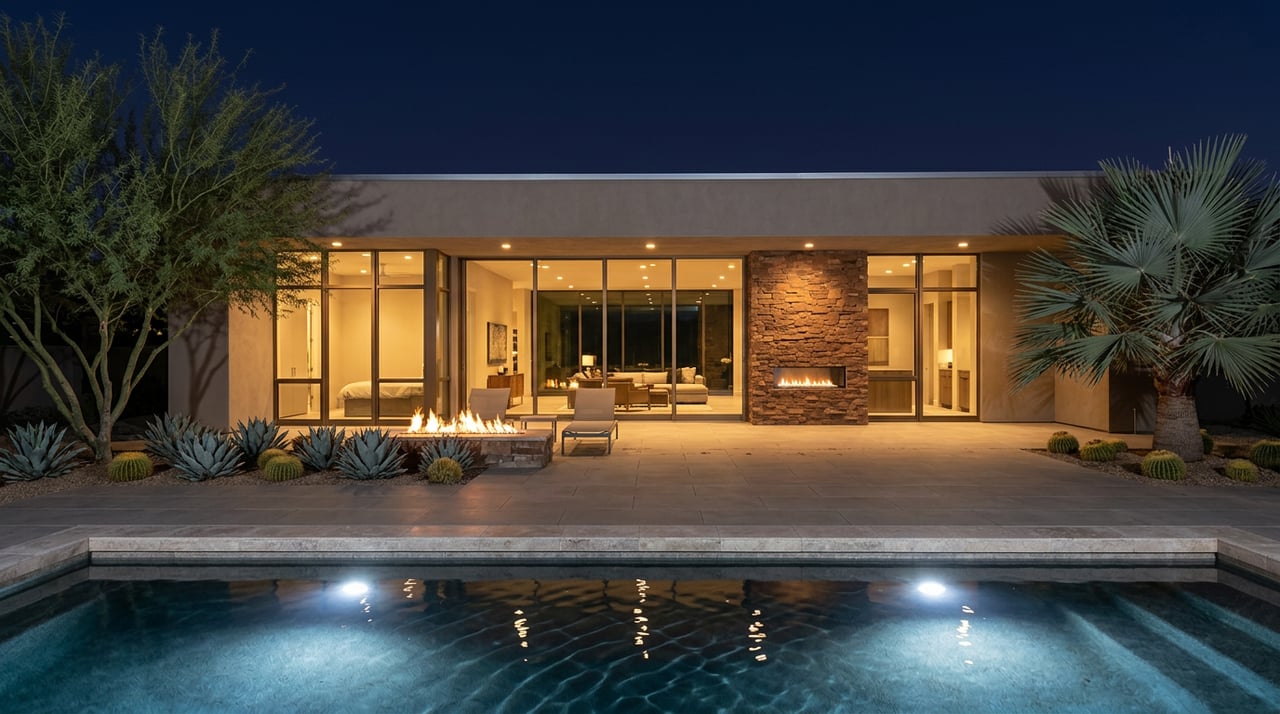
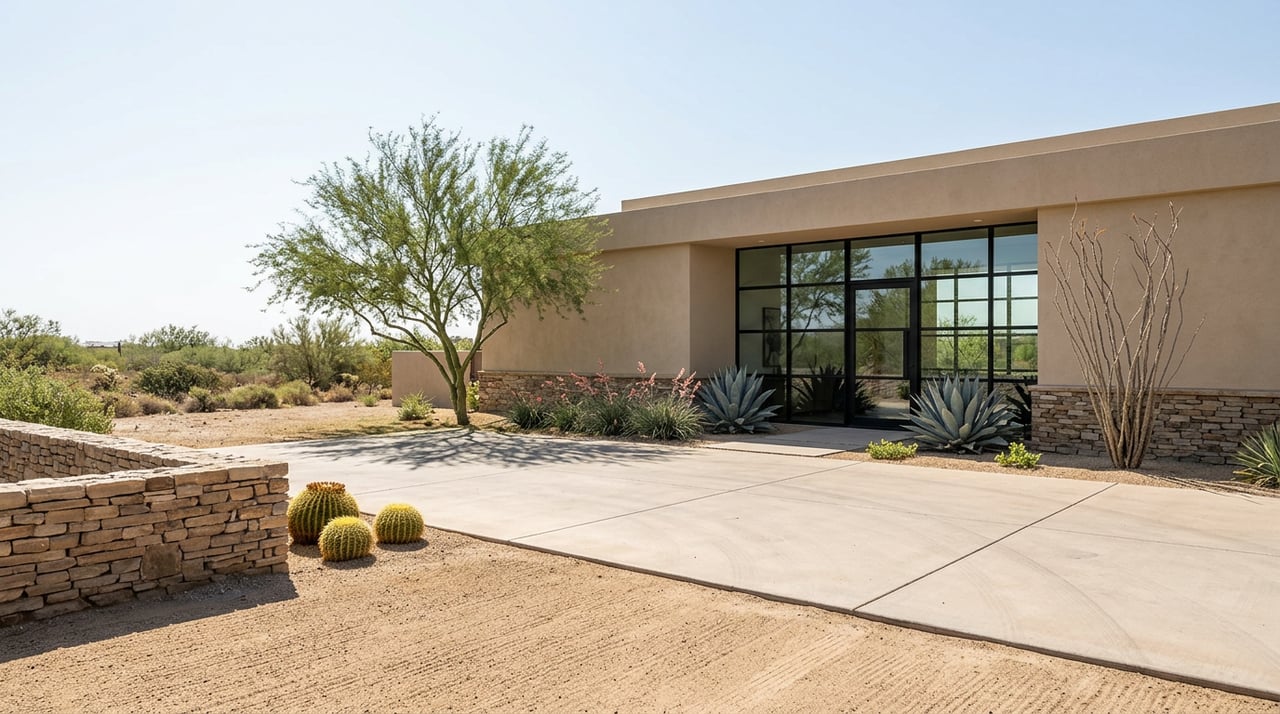
New construction in the town today is limited to two paths: fully custom builds on existing one-acre parcels, concentrated in corridors like Camelback Country Estates near Cherokee Elementary where organic-modern architecture has become the dominant style in 2026, or a handful of small gated enclaves such as Azure at Ritz-Carlton, Paradise Reserve, and Cameldale Estates. There is no third option. There is no version of Paradise Valley where a builder breaks ground on 40 homes at a shared price point, because the zoning code makes that physically impossible on almost every parcel in town.
The Zoning Code Is Doing the Job an HOA Would Do Elsewhere
One detail that surprises relocators coming from HOA-heavy Scottsdale or Cave Creek communities: most of Paradise Valley has no homeowners association at all. The one-acre minimum lot rule combined with a strict design review process for any exterior renovation does the work an HOA would normally do in a planned community, controlling density, setbacks, and architectural consistency without a monthly assessment.
The exceptions are the guard-gated enclaves, places like Clearwater Hills, Finisterre, Judson Estates, Azure at Ritz-Carlton, and Paradise Reserve, where HOA dues exist specifically to fund private gate staffing and shared landscape maintenance rather than to enforce the kind of architectural rules the town itself already handles. If you are comparing a Paradise Valley listing to one in a Scottsdale golf community and lining up HOA dues side by side, you are comparing two different systems that happen to produce a similar result. One town writes the rules into its zoning code. The other writes them into a covenant document you sign at closing.
That same design review process is worth knowing before you buy an older home planning to remodel. Renovation projects in Paradise Valley go through municipal design review regardless of HOA status, which means timelines for additions, height changes, or exterior modifications run through the town rather than a private board. It is a different kind of friction than an HOA architectural committee, but it is friction, and it is worth budgeting time for before you assume a fast turnaround on any change to a home's footprint or exterior.
Sellers Still Move Fast When They Price to the Mechanism, Not the Headline
Inventory across Paradise Valley and neighboring Scottsdale rose through 2026 compared to the tightest recent years, giving buyers more genuine side-by-side comparisons than they had during the scarcity peak. That has not softened outcomes for well-positioned properties. Redfin reported a sale-to-list ratio of 96.6% in February 2026, and Realtor.com showed a similar figure near 96% in January, meaning homes priced correctly for their setting are still closing within a few percentage points of asking. The properties that sit are the ones priced against last year's headline median instead of against what a one-acre, design-review, zoning-constrained market will actually bear this year.
Financing looks different here too. A high share of transactions in the $5 million to $15 million range close in cash, which insulates seller timelines from mortgage rate swings that move other Valley submarkets more visibly. If you are a buyer competing for a property in that range, a pre-approval letter alone will not put you on equal footing with an all-cash offer, and sellers price their expectations accordingly.
How to Actually Use This When You Compare Neighborhoods
If you are cross-shopping Paradise Valley against Scottsdale's Silverleaf, Cave Creek's equestrian parcels, or Fountain Hills' view lots, stop leading with the median. Lead with the constraint. Ask what the zoning allows to be built next to what you are looking at, ask whether the HOA fee is buying you gate staffing or architectural review, and price per square foot against comparable one-acre lots rather than against a townwide average built from a few dozen trades. That comparison will tell you more about what your money is actually reserving than any single number pulled from a portal.
FAQ
Does Paradise Valley have HOAs? Most of the town does not. The one-acre minimum lot rule and municipal design review process handle much of what an HOA would otherwise govern. A small number of guard-gated enclaves, including Clearwater Hills, Finisterre, Judson Estates, Azure at Ritz-Carlton, and Paradise Reserve, do carry HOA dues, primarily to fund private gate staffing and shared landscaping.
Is new construction possible in Paradise Valley in 2026? Yes, but only as fully custom builds on existing one-acre parcels or within a handful of small gated enclaves. There are no tract-builder subdivisions because the town's zoning code has prohibited that scale of development since its 1961 incorporation.
Why do median price estimates for Paradise Valley vary so much between sources? Low monthly sales volume. With roughly 100 closings in a typical month across a town of about 5,800 households, a small number of trophy-tier or land-value sales can move a median by seven figures, and different data providers calculate that median on different timelines and methodologies.
Reading a Paradise Valley listing correctly means reading the zoning behind it, not just the price on it. If you are weighing this town against another Greater Phoenix community, or want a straight read on what a specific property's price actually reflects, Common Sense Real Estate 101 will walk you through the comparison with a free home valuation and no inflated commission attached to the advice.