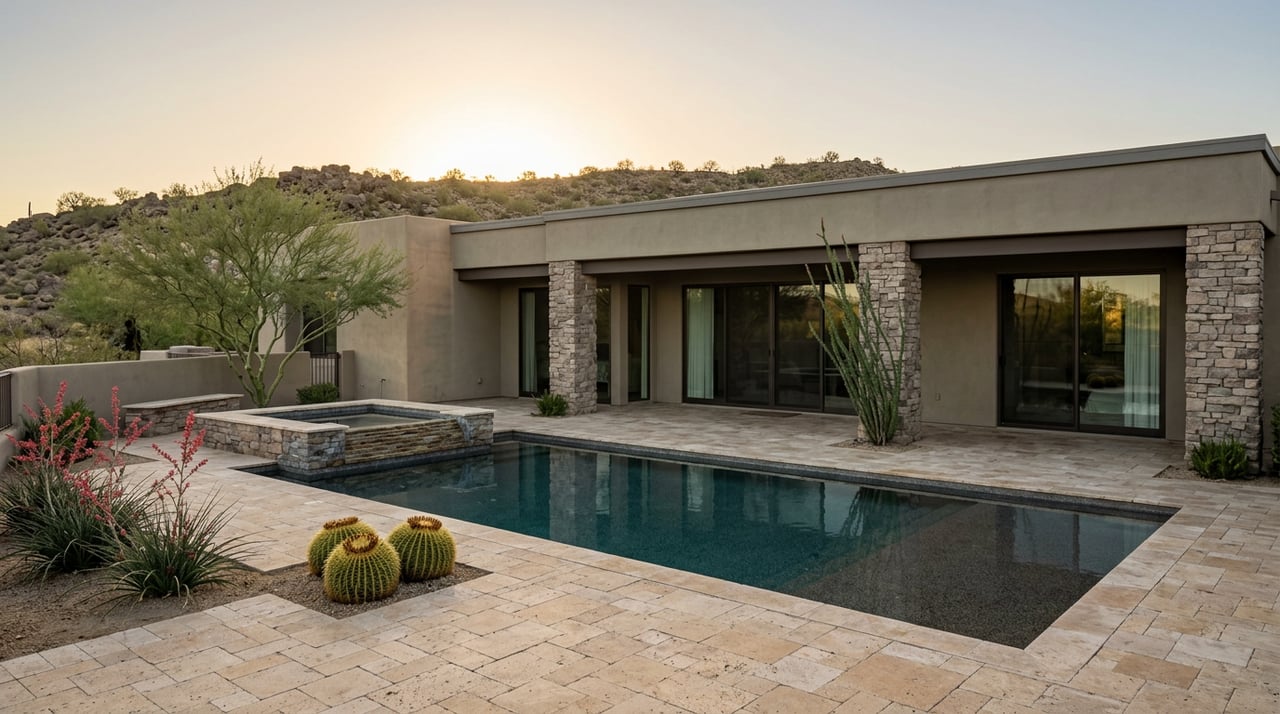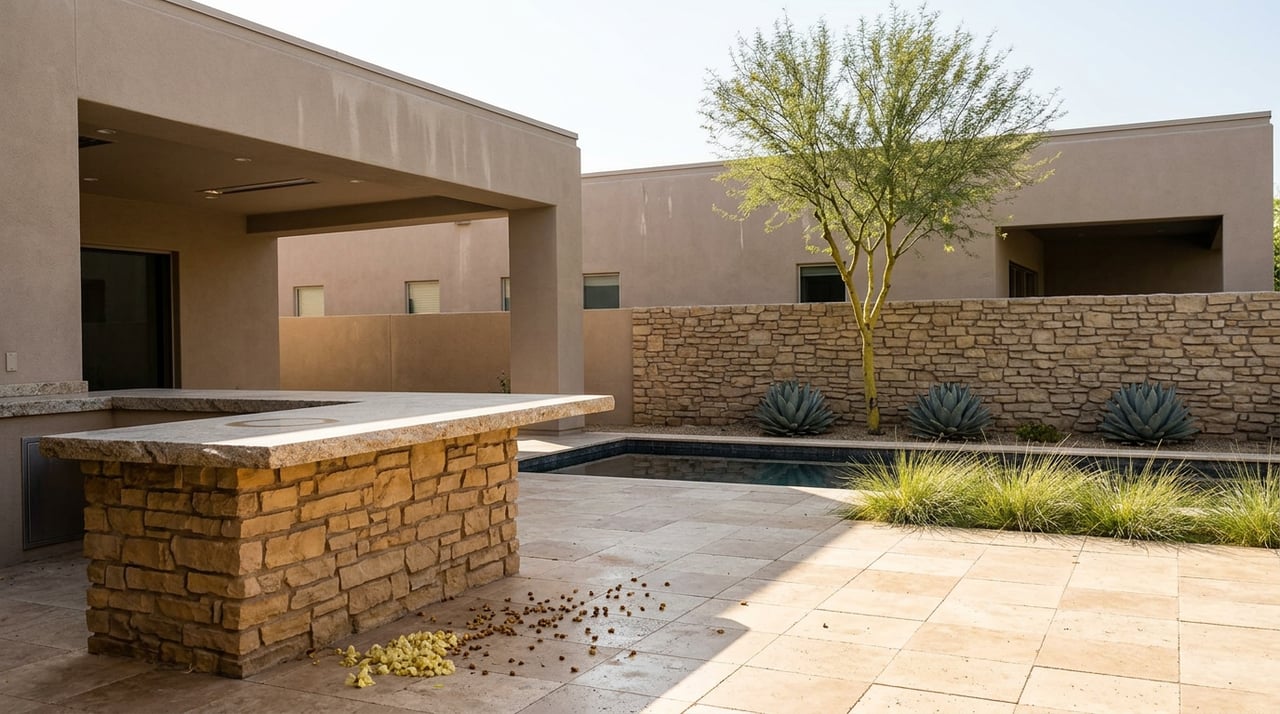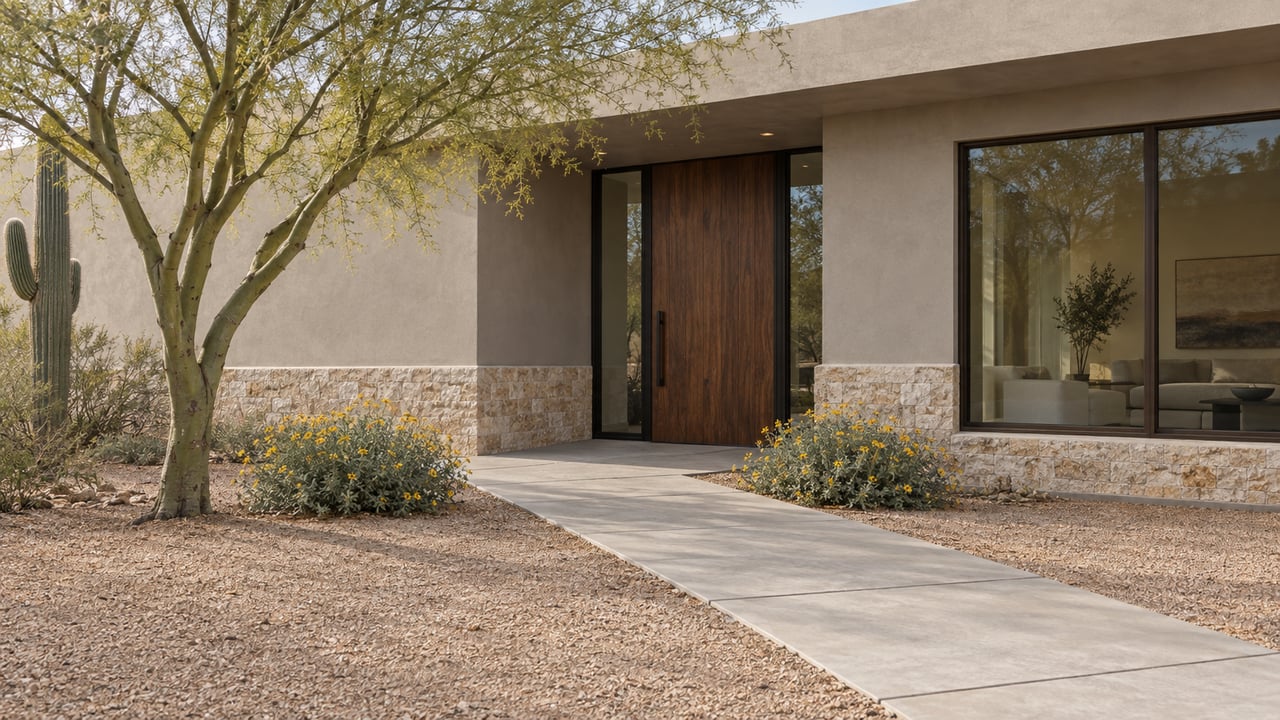
Escrow on well-and-septic acreage in Cave Creek almost always clears the septic hurdle without drama. The system gets inspected, the report gets filed, everyone signs where they're told to sign. The paperwork that actually stalls these closings is the one nobody thought to pull: the agreement that says who has the legal right to draw from the well in the first place.
That distinction matters more in Cave Creek than in most North Valley towns, because the town is genuinely split down the middle on utilities. South Cave Creek's master-planned communities, Tatum Ranch, Dove Valley Ranch, and Rancho Mañana, run on municipal or community water systems. Cross north of downtown or out toward the edges of town and you're in Desert Rural zoning, where a well and a septic system are standard equipment, not a quirk. The town's own official notice to prospective buyers spells this out directly: for properties not served by the Cave Creek Water Company, the Arizona Department of Water Resources issues the well permit, and water rates in general run higher than in neighboring communities. It's also worth knowing that the 85331 zip code isn't a reliable guide to any of this. The town's FAQ page notes that 85331 addresses can sit inside Cave Creek, Carefree, Phoenix, Scottsdale, or unincorporated Maricopa County, so a zip code tells you almost nothing about which utility rules actually apply to a specific parcel.
Where the Line Actually Falls
The price bands track the utility split almost exactly. South Cave Creek's master-planned inventory runs $700,000 to $900,000 with municipal service included. North of downtown, custom homes on 2 to 5 acre lots run $1.5 million to $4 million or more, and wells and septic are standard there. The equestrian-focused stretch with direct access to the Tonto National Forest trail system runs $850,000 to $2.5 million, also well and septic. The northwest pocket bordering Cave Creek Regional Park runs $850,000 to $2 million with mixed HOA situations but the same private utilities. Far north acreage bordering Spur Cross Ranch Conservation Area, the wildest and most off-grid feeling part of town, runs $1 million to $3.5 million or higher, on wells and septic by default.
None of that is a fringe slice of the market. It's most of the acreage inventory above $850,000, which means the paperwork problem below isn't an edge case. It's the norm for anyone buying or selling on the north and west sides of town.
The Septic Half Is the Predictable Half
Arizona's onsite wastewater transfer program has a clear timeline, and that's exactly why it rarely causes problems. A qualified inspection has to happen within six months before the property transfers. The seller has to deliver the Report of Inspection along with the system's documentation. The buyer then files a Notice of Transfer within 15 days after closing. Every deadline in that chain is knowable in advance, which means a good escrow officer builds it into the timeline the same way they'd build in an appraisal contingency.
The Well Half Isn't Regulated the Same Way
Individual wells follow a similar paper trail. Arizona requires a Notice of Intent to Drill before a well is drilled or modified, and ADWR keeps a Well Registry that a title company or buyer's agent can check. That part works.
Shared wells are where the system stops helping you. A meaningful number of Cave Creek's older acreage parcels, particularly in Lone Mountain and the outer subdivisions, were split off decades ago with two, three, or more homes drawing from a single well. The agreement governing who maintains it, who pays for repairs, and who has the legal right to keep drawing from it doesn't live with ADWR. Shared well agreements aren't regulated by the state agency, and they generally don't show up in ADWR's imaged well records at all. If one exists, it's recorded with the Maricopa County Recorder, or it isn't recorded anywhere, because it was a handshake between the original owners that nobody ever bothered to put on paper.
A well test tells you the water is good. It doesn't tell you who has the legal right to keep drawing from it.
Why This Surfaces Late, Not Early
Arizona doesn't require sellers to fill out a general disclosure form at all. The obligation instead comes from case law, specifically Hill v. Jones, a 1986 Arizona Court of Appeals decision that requires a seller to disclose facts they actually know that materially affect the property's value and that a buyer couldn't reasonably discover on their own. That standard is broad, but it only reaches what the seller actually knows.
That's precisely why the shared well problem slips through. A seller who has lived on a shared well for fifteen years without incident often has no idea whether the original agreement was ever recorded. They aren't hiding anything. There's nothing in their memory to disclose, because the gap isn't a fact they're withholding, it's a document that may never have existed in recorded form. The septic transfer program has a state agency checking behind it. The well access question doesn't, which means the burden of finding out shifts entirely to whoever is doing due diligence during the inspection period, not after.
The Other Way Septic Competes for Space
Cave Creek's hillside development standards add a second, less obvious constraint for anyone buying acreage with plans to add a pool, guest casita, or workshop later. The town's disturbance caps vary by zoning designation: DR-190 lots are capped at 15 percent total disturbance, DR-89 and DR-70 at 20 percent, and DR-43 at 30 percent. Driveways, septic fields, pools, and accessory structures all draw from that same allowance. A septic system already installed on a lot has effectively spent part of that budget before a buyer ever tours the property, which means the generous main house they're touring may leave less room than expected for the guest casita or pool they're planning to add.
What This Actually Changes at the Table
For sellers on a well-served or shared-well parcel, the move is to pull whatever recorded agreement exists from the county recorder before listing, not after an offer comes in. If the septic system hasn't been inspected recently, get the Report of Inspection lined up so it's ready inside the six-month window rather than scrambled together during a tight escrow.
For buyers, the well and septic pieces need separate line items in the inspection contingency, not one combined checkbox. A clean septic Report of Inspection says nothing about whether the well access is legally documented. If a shared well agreement can't be located, that's a term to negotiate before closing, whether through a title company crafting a recordable easement, an escrow holdback, or simply extending the inspection period until county records can be searched properly. And if a pool or casita is part of the plan, checking the septic field's footprint against the parcel's zoning disturbance cap before writing an offer avoids finding out after closing that there isn't room left to build it.
FAQ
What happens if a shared well agreement genuinely doesn't exist? It isn't automatically a dealbreaker. Buyers and sellers can work with a title company to draft and record a new easement and maintenance agreement as a condition of closing, which gives the buyer the documentation the original owners never created.
Does the septic transfer requirement apply to every home sale in Cave Creek? It applies whenever a property served by an onsite wastewater system changes ownership, which covers the large majority of homes north of downtown and on the outer edges of town, since municipal sewer service is concentrated in the master-planned communities to the south.
Does being inside a named master-planned community guarantee municipal water? Generally yes for Tatum Ranch, Dove Valley Ranch, and Rancho Mañana, but the parcel should still be confirmed individually. Town boundaries and utility service areas don't always follow zip codes, and 85331 addresses can fall under several different jurisdictions.
If you're preparing to sell acreage on a well and septic in Cave Creek, or you're under contract on one and want someone who already knows which records to pull and in what order, Common Sense Real Estate 101 can walk you through it before it becomes a closing-week surprise. Get a Free Home Valuation and we'll start with the utility file, not just the comps.